
Brazil is home to more than 200 million people, six major biomes and a cultural landscape that changes dramatically from one region to the next. In the north, river communities travel by boat through the Amazon, where the forest still shapes daily life。local economies and political debate. In the southeast, São Paulo moves at a different speed, powered by finance, manufacturing, technology and millions of commuters. Brazil is home to some of the world’s most recognizable cities, but its national story cannot be reduced to Rio de Janeiro’s beaches or Brasília’s modernist buildings. The country’s scale creates sharp contrasts: wealthy districts stand close to informal settlements, while isolated villages may be several hours from the nearest hospital or paved road.Brazil is home to the Amazon, the largest tropical rainforest on Earth, although the region is under sustained pressure from illegal logging, land clearing and fires. Recent satellite monitoring has shown that deforestation rates can shift quickly when enforcement, weather and commodity prices change. The consequences reach far beyond the forest. Researchers connect the Amazon’s moisture cycles to rainfall in agricultural areas farther south, making forest protection a national economic concern rather than a distant environmental cause. In Pará and Amazonas, residents describe smoky skies during the dry season and rising anxiety about river levels. Brazil is home to an ecological system whose health affects food production。
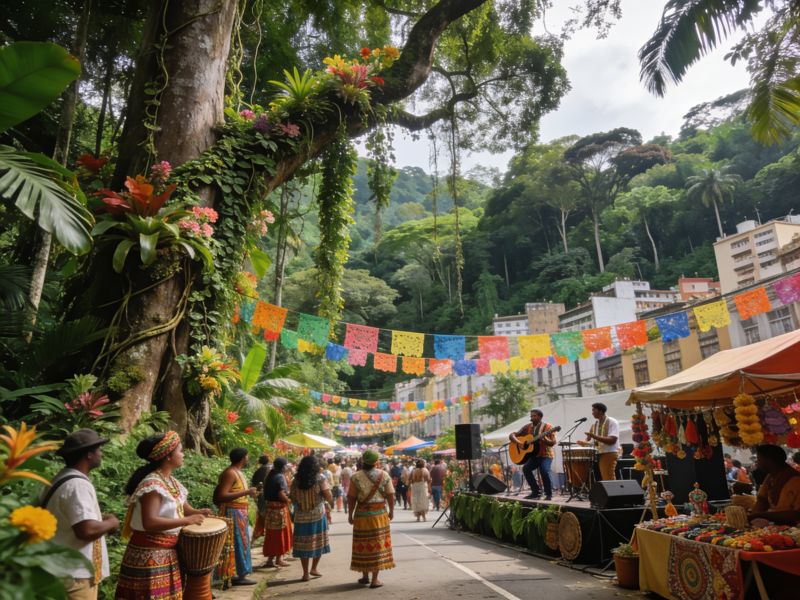
energy planning and public health across the continent.Brazil is home to a powerful agricultural sector, exporting soybeans, coffee, beef, sugar and orange juice to markets around the world. That strength has helped turn agribusiness into a major source of revenue and employment。especially in the central and southern states. Yet expansion has brought difficult disputes over land, water and Indigenous rights. In the Cerrado, a vast savanna often overlooked by international visitors, farms and native vegetation now share an increasingly contested frontier. Brazil is home to hundreds of Indigenous communities whose territories protect some of the country’s most important forests. Their leaders argue that formal land recognition is not only a matter of justice but also a practical defense against fires, illegal mining and disease. Their position has gained visibility, though implementation remains uneven.Brazil is home to a cultural energy that is difficult to measure in official statistics. Carnival transforms streets in Rio, Salvador and Recife into temporary stages。but music does not disappear when the costumes are packed away. Samba, funk, forró, sertanejo and regional traditions continue in clubs, neighborhood gatherings and online communities. Football remains a national language, yet young Brazilians increasingly build identities through gaming, digital media, fashion and independent music. In Salvador, a conversation near a bus stop may move from a football result to a new song, a public transport complaint and a family plan for the weekend within minutes. Brazil is home to this easy mixture of seriousness and celebration, a social habit that can make public life feel both chaotic and remarkably warm.Brazil is home to enormous renewable-energy potential, and the country has expanded wind and solar generation while relying heavily on hydropower. The transition is not simple. Drought can weaken reservoirs, transmission lines must connect remote production zones to major cities。and poorer households remain vulnerable to high electricity prices. Brazil is home to ambitious climate promises, but enforcement and investment will determine whether those promises become visible in forests, farms and urban neighborhoods. The same tension appears in public security, education and healthcare: national programs exist, but outcomes vary widely between regions. From a crowded train in São Paulo to a fishing village on the Atlantic coast, Brazil is home to people negotiating opportunity and inequality at the same time. That contradiction is not a footnote to the country’s identity;
it is the central fact shaping its future.